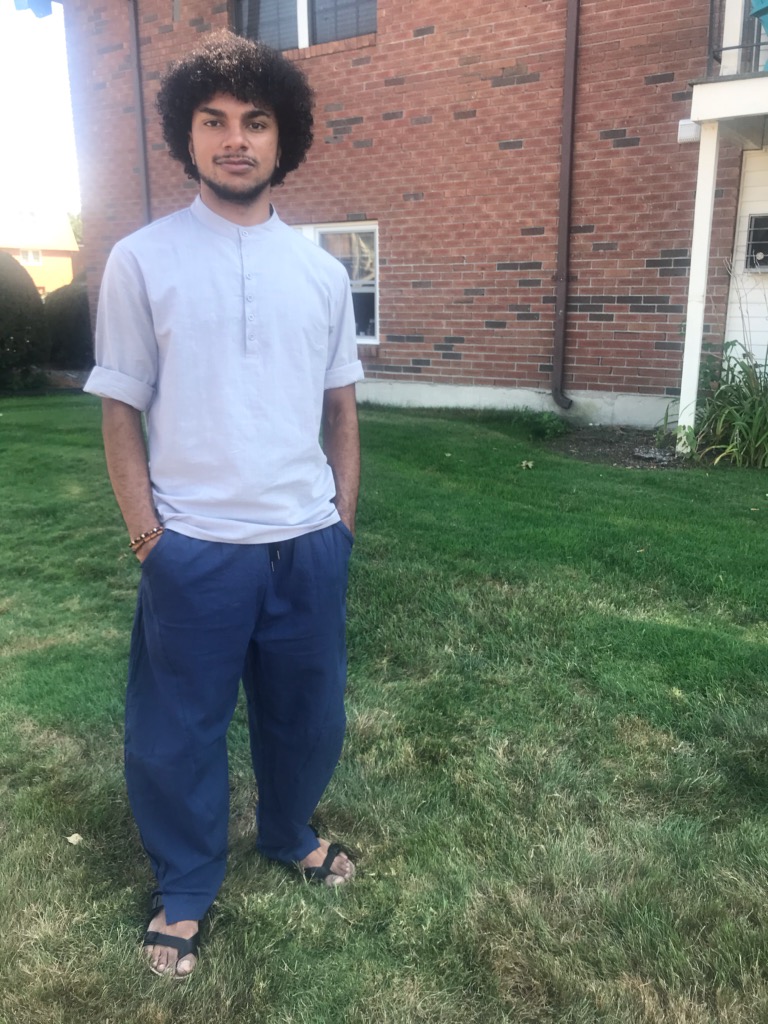
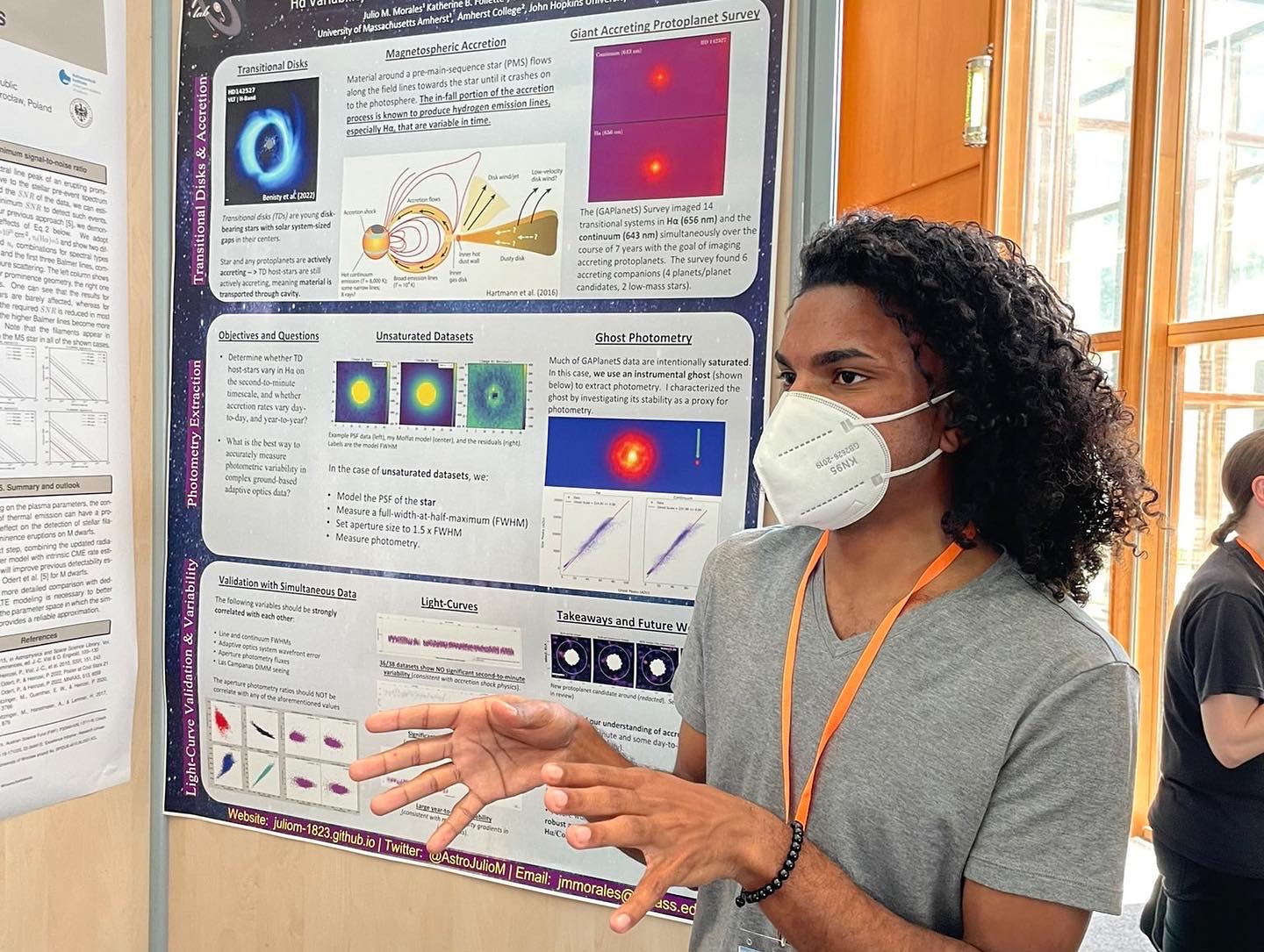
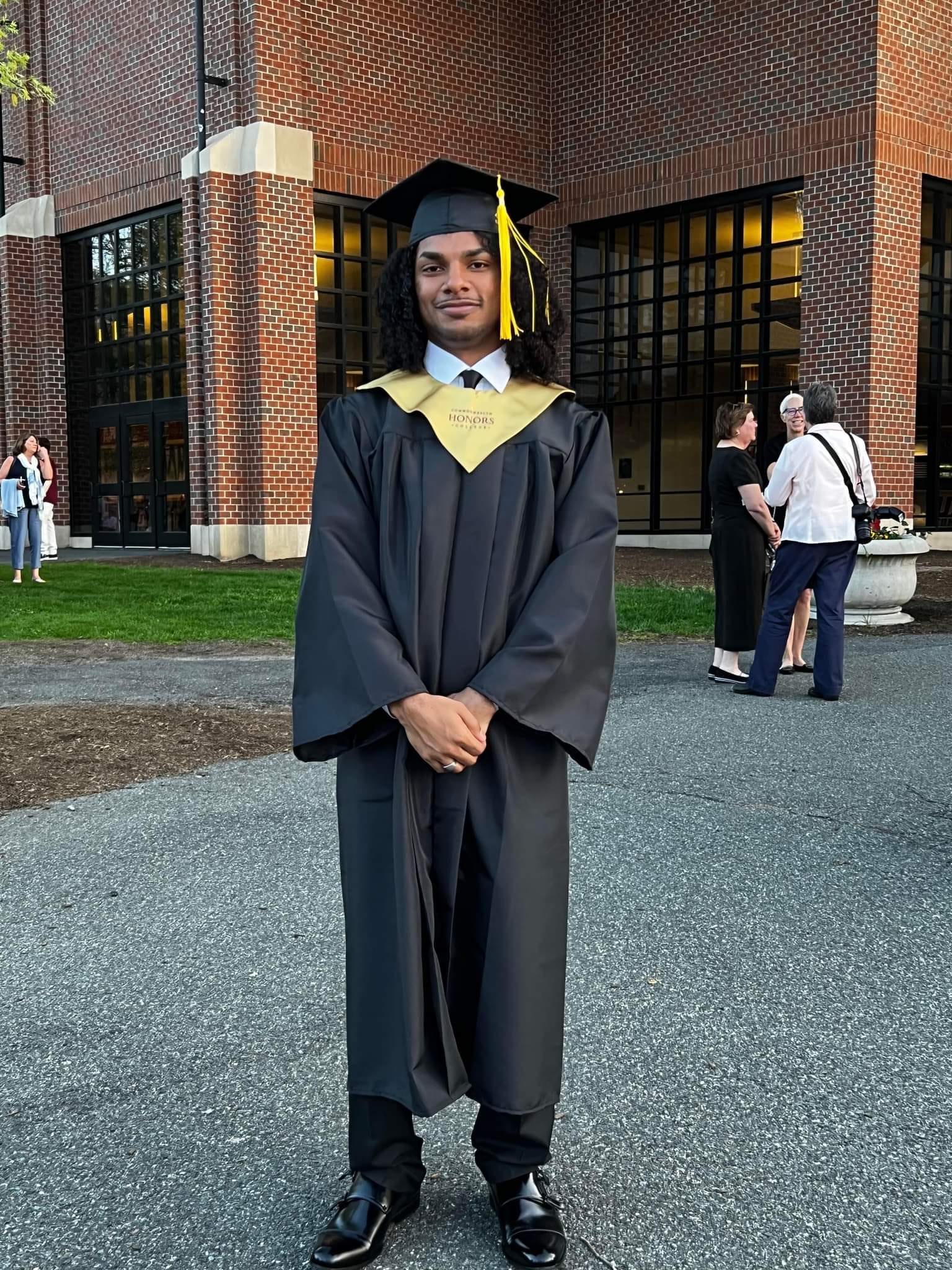
I’m Julio, an astronomy Ph.D. candidate at New Mexico State University.
My work spans helioseismology, solar atmospheric gravity waves, and reproducible scientific computing. I completed my M.S. in Astronomy at NMSU in May 2025 and my B.S. in Physics and Astronomy at UMass Amherst in May 2022.
My name is Julio (Manuel) Morales, welcome to my website! I'm a first-generation, Puerto Rican, Ph.D. student, a proud member of the LGBTQIA+ community, and an aspiring Astrophysicist. This page is for you to get to know me and my academic career.
Like many people of Hispanic-descent, I grew up in a gigantic family, with 6
siblings, 15 aunts and uncles, and hundreds of first, second, and third cousins.
A large percentage of our family reunites every 2 years in a big, multiple day
event of family fun with Puerto Rican cusine, music/dance, and competitions. My
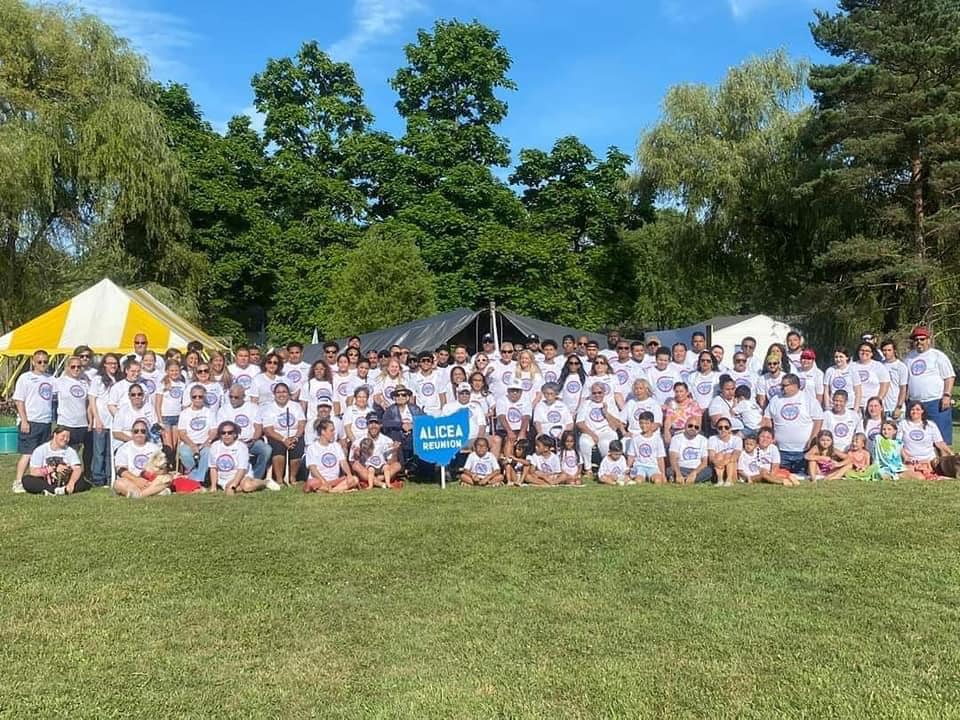
family is the biggest source of support and love in my life. The picture above
is one of our reunions.
My mom, aunts, and I at Evolution 2016 in
Las Vegas, Nevada.
At some time around the age of 12, I became interested in becoming a
professional fighting game player. After training for a couple years, I
became good enough to justify competing in the professional scene!
When I was 17, I attended Evolution 2016—the largest fighting game
competition in the world. I competed for Mortal Kombat X and Street Fighter
5, for which I placed in the top 116 of players (out of a couple hundred for
Mortal Kombat and 5,000 for Street Fighter)!
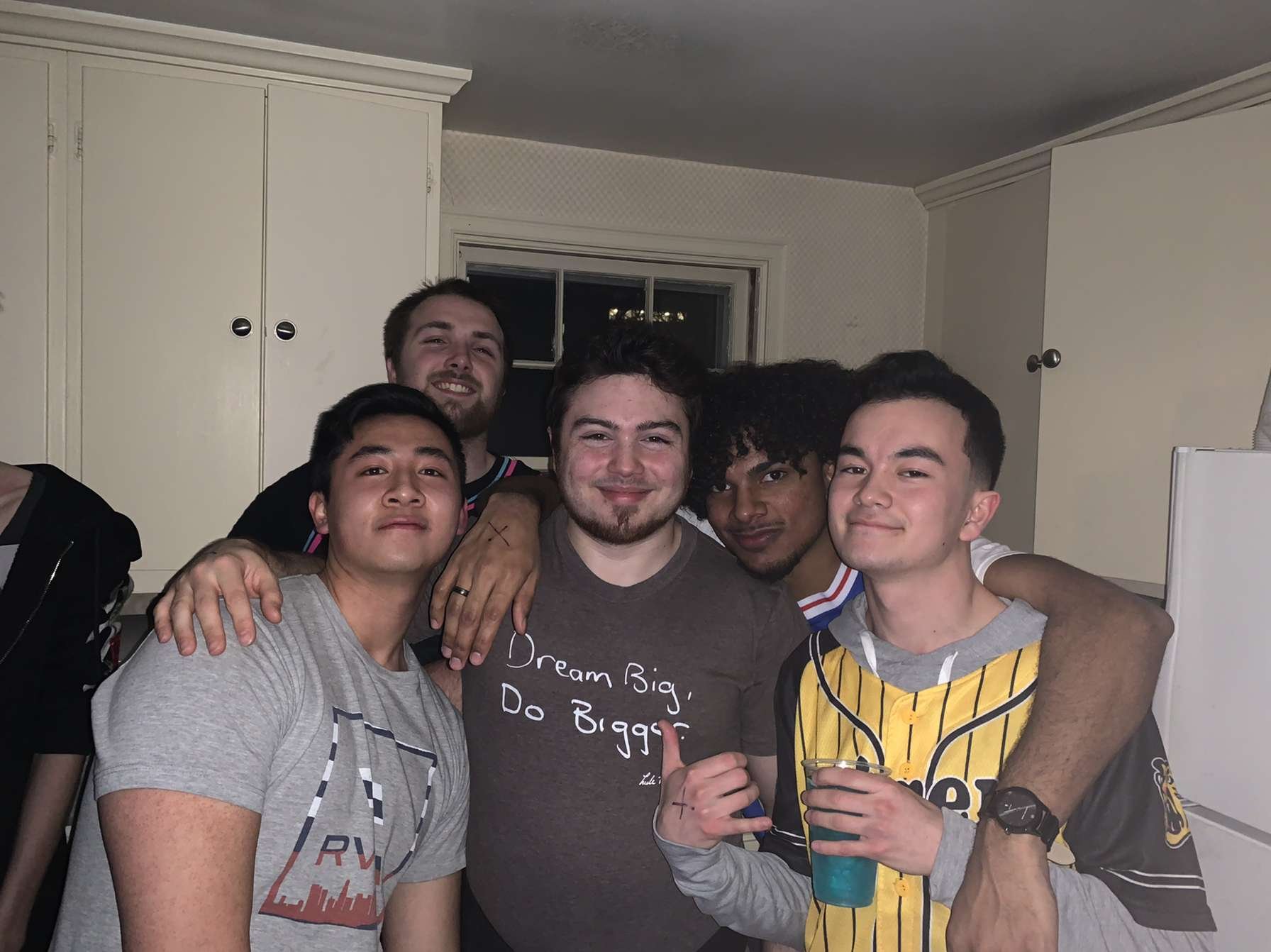
My bestfriends and I.
At UMass Amherst, I met these guys, who taught me about life-long
friendship and loyalty, and are still my bestfriends to this day.
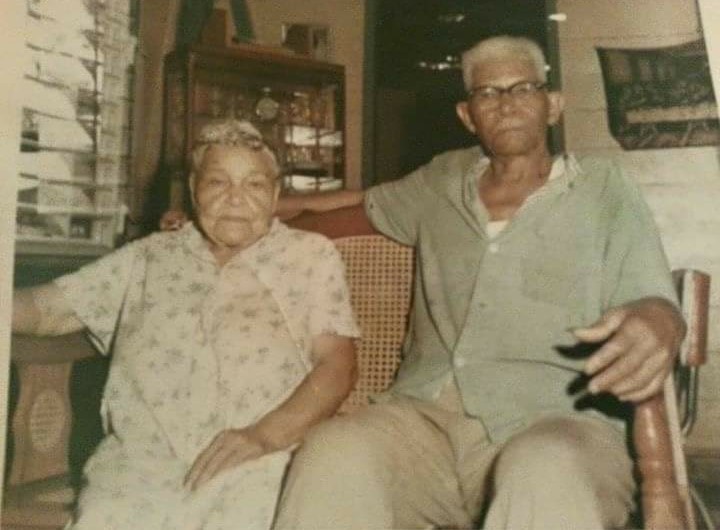
My great-great-grandparents. Mama
Maria (left) and Papa Bartolo (right).
One of my maternal family names—Alicea, orginates from my
great-great-grandfather, Bartolo Alicea, shown in the image above.
The son of French immigrant Jose Alicea and freed African, Marquita
Alicea, Papa Bartolo was born in Yaurel, Puerto Rico, in 1882—a time
of anti-Spaniard revolution.
When he was just a child, Papa Bartolo joined the secret society
known as "El Torre del Viejo" which organized an economic boycott
against the Spanish.
Papa Bartolo exchanged messages between rebels across the various
towns involved in the boycott, before eventually being caught by the
Spanish
and brought to "El Morro" in San Juan. Papa Bartolo survived his
capture, though he was tortured for information.
Opposition to Spanish rule of native Puerto Ricans was not unanimous
across the island. The considerably popular "Assimilationist Party"
in Puerto Rico preached for our assimilation into Spanish politics.
My great-great-grandfather's story reminds me that revolutionary
work is often dangerous and unpopular.
Yet despite the risk of bodily harm and social isolation, Papa dared
to go against the status quo to oppose the violence of colonization.
I hope to honor Papa's memory by fighting against the same
principles that he opposed.
No matter the risk to my career or even my life, I will always
call-out and combat the systems that force assimilation into white,
cis-heteropatriarchy.
During this battle, that will certaintly not be over by the end of
my lifetime, if I ever feel like I'm losing the fight, I'll just
remember Papa Bartolo's story, or the countless stories of revolts
lead by the enslaved Africans and Taino in Puerto Rico, and I'll
remember
that I am no bystander. I am a fighter, like so many of my ancestors
before me.
Thank you for showing me how it's done Papa.
Bendicion, y descanse en paz.
My Academic Journey
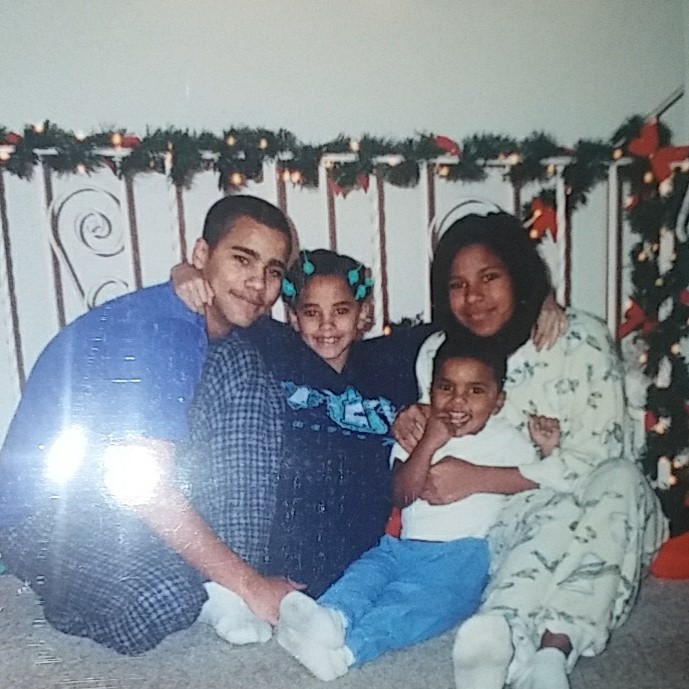
6 year old me with my siblings
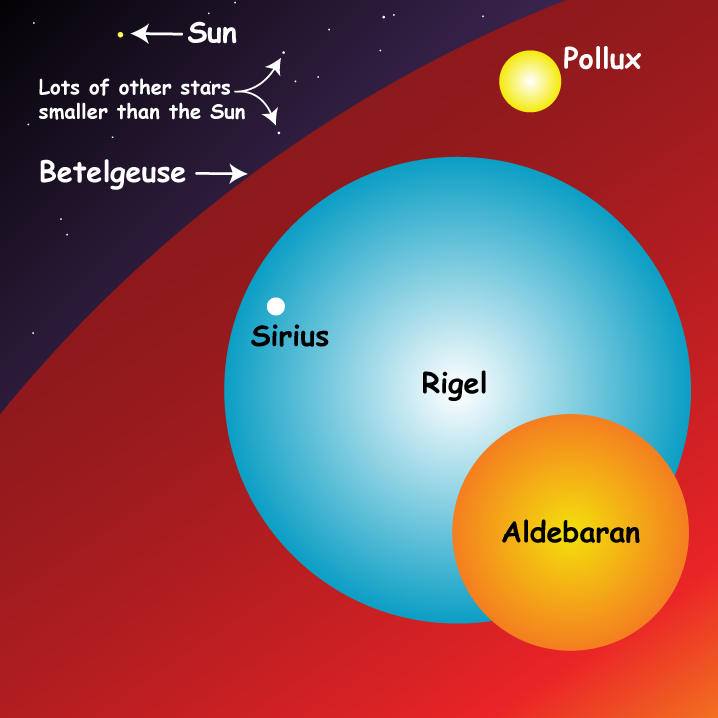
Figure 1: Size
comparisons of various stars
Like many in the field, I was inspired to pursue Astronomy at an early age.
I can vividly remember being 6 years old, with nothing to do, but watch TV.
In my search for something to capture my young, curious mind,
I eventually stumbled across a show called "The Universe" on the National
Geographic Channel. This episode was all about stars—how they form, evolve,
and die, and the vast differences that can exist between any two stars.
I was instantly enamoured. The shear
sizes and distances invloved (see Figure 1) in stellar
Astronomy inspired so many ideas and questions; why are some stars different
from others? How many stars are there? What colors do stars come in? My eyes
were glued to the TV whenever an
Astronomy documentary populated its pixels.
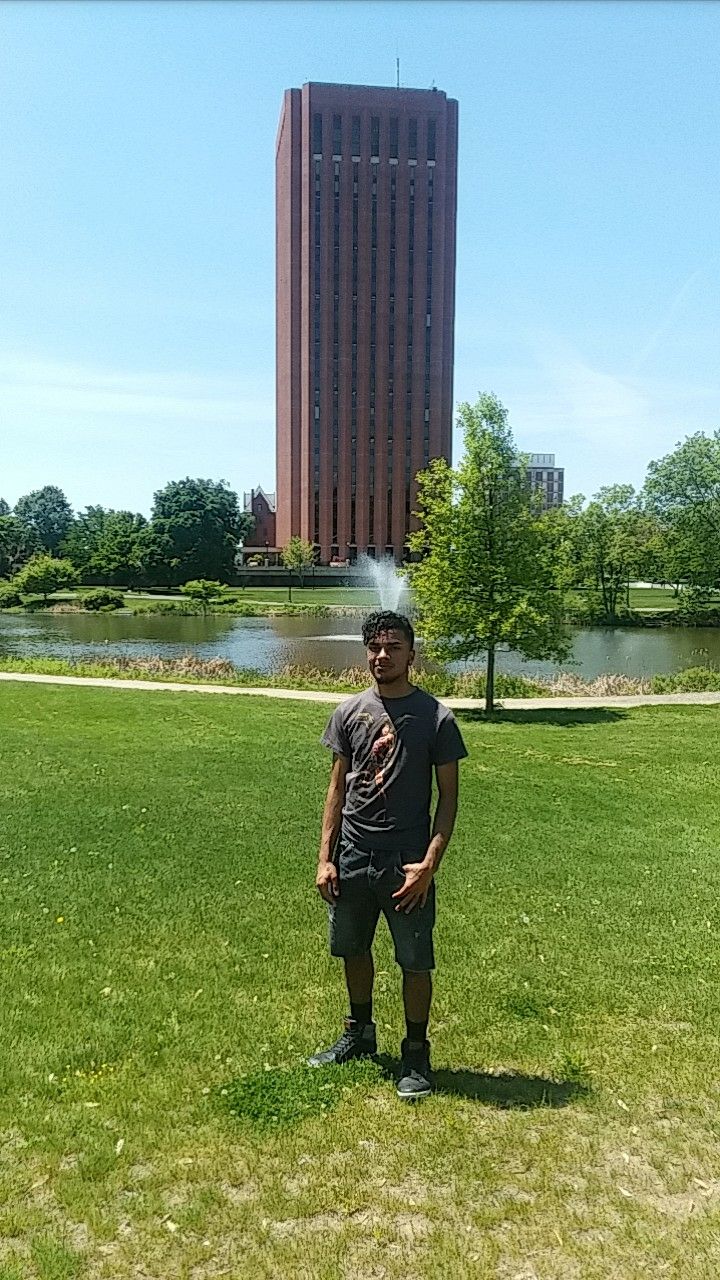
Me at the UMass Amherst campus tour after
being accepted
I spent months watching every piece of Astronomy media I could find, and it
didn't take long before I realized that I wanted to be an Astronomer. I
understood
that I would have to go to college to accomplish this goal, so I snuck
on my mothers Windows XP computer and googled "astronomy school". I read
about UMass Amherst—a school where they made some big discoveries at the
time. Being the self-assured child that I was, I told myself that I would
one day go there. Fast forward
13 years and I was accepted into the Astronomy Department at UMass Amherst!
Me at the UMass Amherst 2022 commencement
ceremony.
Four years after that, and I finished my Bachelors of Science in Astronomy
and Physics in the spring of 2022 (see my CV). I am now at New Mexico State
University where I work on my Ph.D with Professor Jason Jackiewicz on the
solar meridional flow using helioseismology.
I hope to eventually become a Professor of Astronomy at a small liberal arts
college, so
that I may continue research in the field, and lead my own lab of
(primarily) undergraduate students.
Research
Current research projects are available in the academic record.
Solar wave simulations
Numerical visualizations of atmospheric gravity waves, wave conversion, and magnetic infall.
Three-dimensional atmospheric gravity-wave particle motion. Download video.Magnetic infall, from shocks to planets. Download video.Solar gravity-wave conversion. Download video.Alfvén wave propagation. Download video.Solar gravity-to-Alfvén wave conversion, multiview. Download video.Refined solar gravity-to-Alfvén wave conversion. Download video.Solar gravity waves viewed from the photosphere. Download video.
Interactive transverse-wave interference
Explore how two transverse waves combine as you adjust their direction, frequency, amplitude, phase, and polarization.
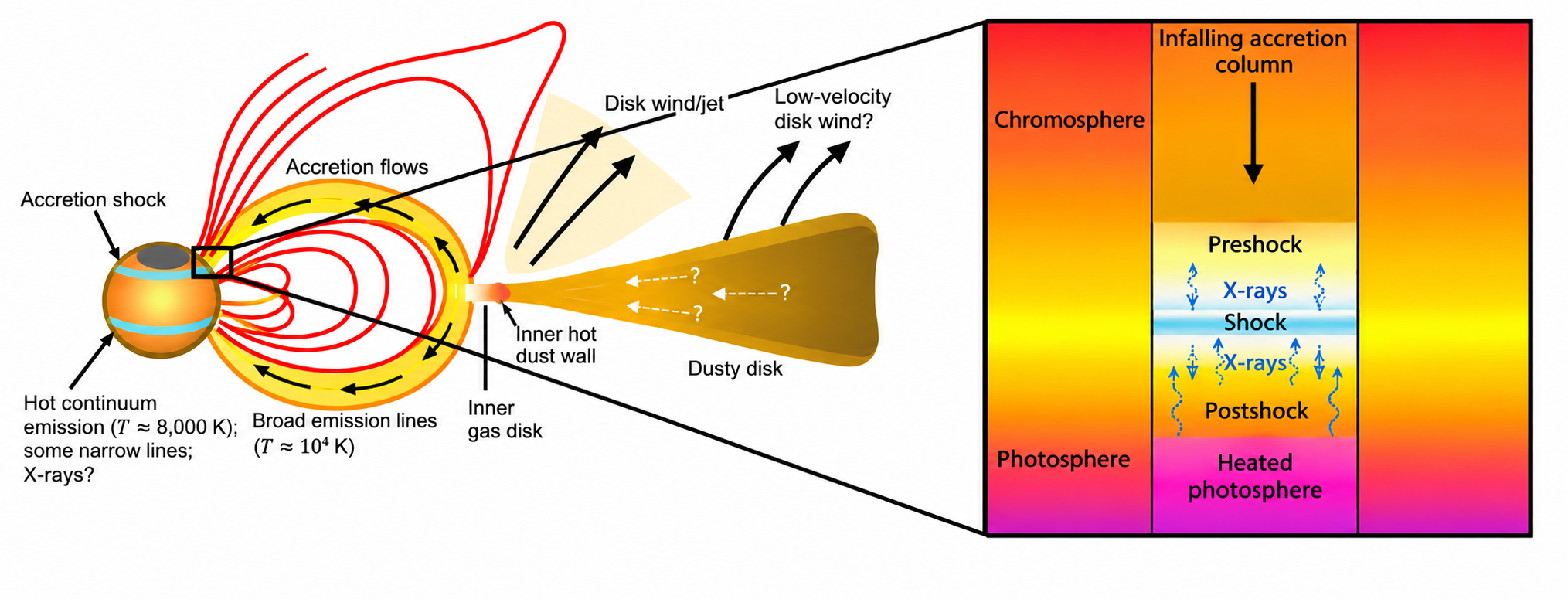
Figure 2: The
magnetosphere of the star
sets up an accretion column. The in-falling material produces Hα
emission and the shocked reigon emits X-rays.
The surrounding matter absorbs the energy emitted from the X-rays
and produces a hotspot on the photosphere which emits in the UV and
optical. Hartmann
et al. (2016)
These are young, low-mass stars in a phase of formation characterized by
accretion on to the star from the circumstellar environment. T-Tauri
stars possess strong magnetic fields (several kilogauss). Their fields are
so strong that they can interupt the
Keplerian orbit of the inner-disk material. The material flows along the
stellar magnetic field lines and crashes on to the photosphere where it
shocks
and produces X-ray, UV, and optical emission (see Figure
2).
Protoplanetary Disk Chemistry
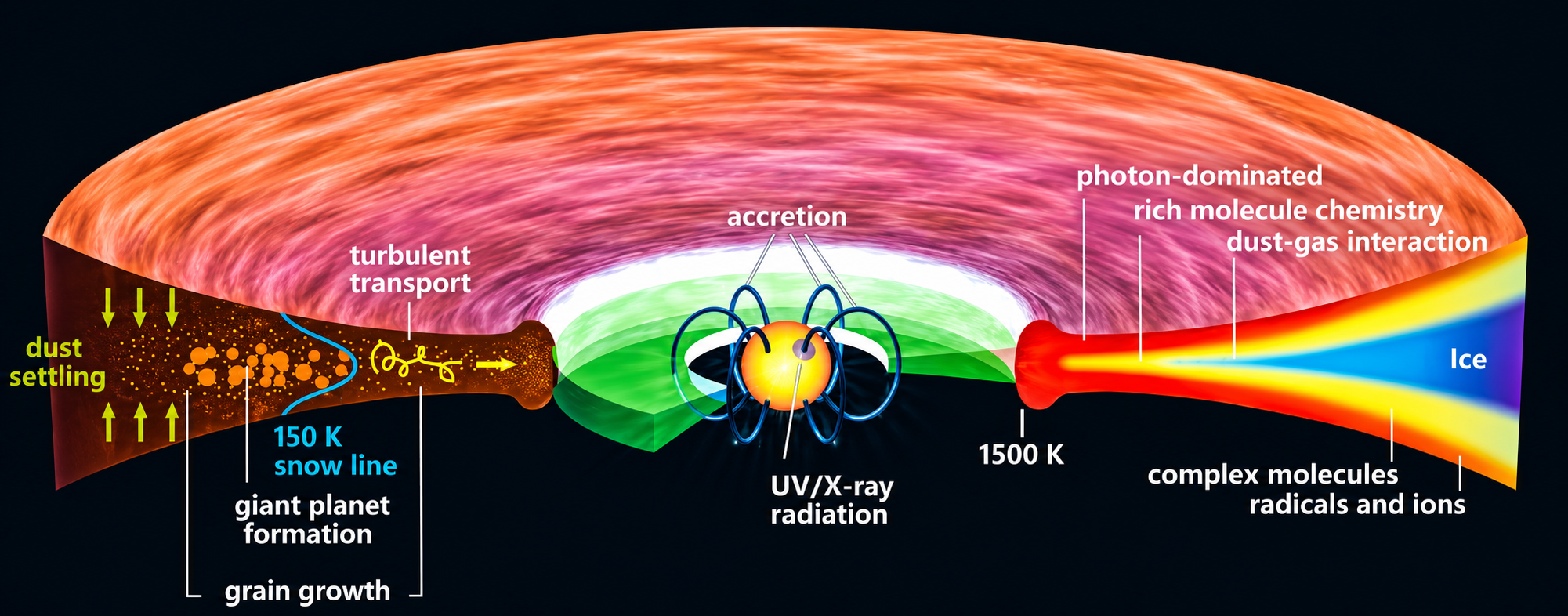
Figure 3: The accretion
process provides the primary source of UV photons
which mediate the production of organic molecules within the
protoplanetary disk. These molecules are thought to make their way
onto the planets that will
eventually form from the protoplanetary disk. Rab
et al. (2016)
The accretion process is the primary source of ionizing photons in a
planetary systems early life, and is believed to
influence the chemical and physical properties of the protoplanetary disk
(see Figure 3). Studying the accretion process is the
ground work to a
deterministic model of planet formation.
Accretion Variability
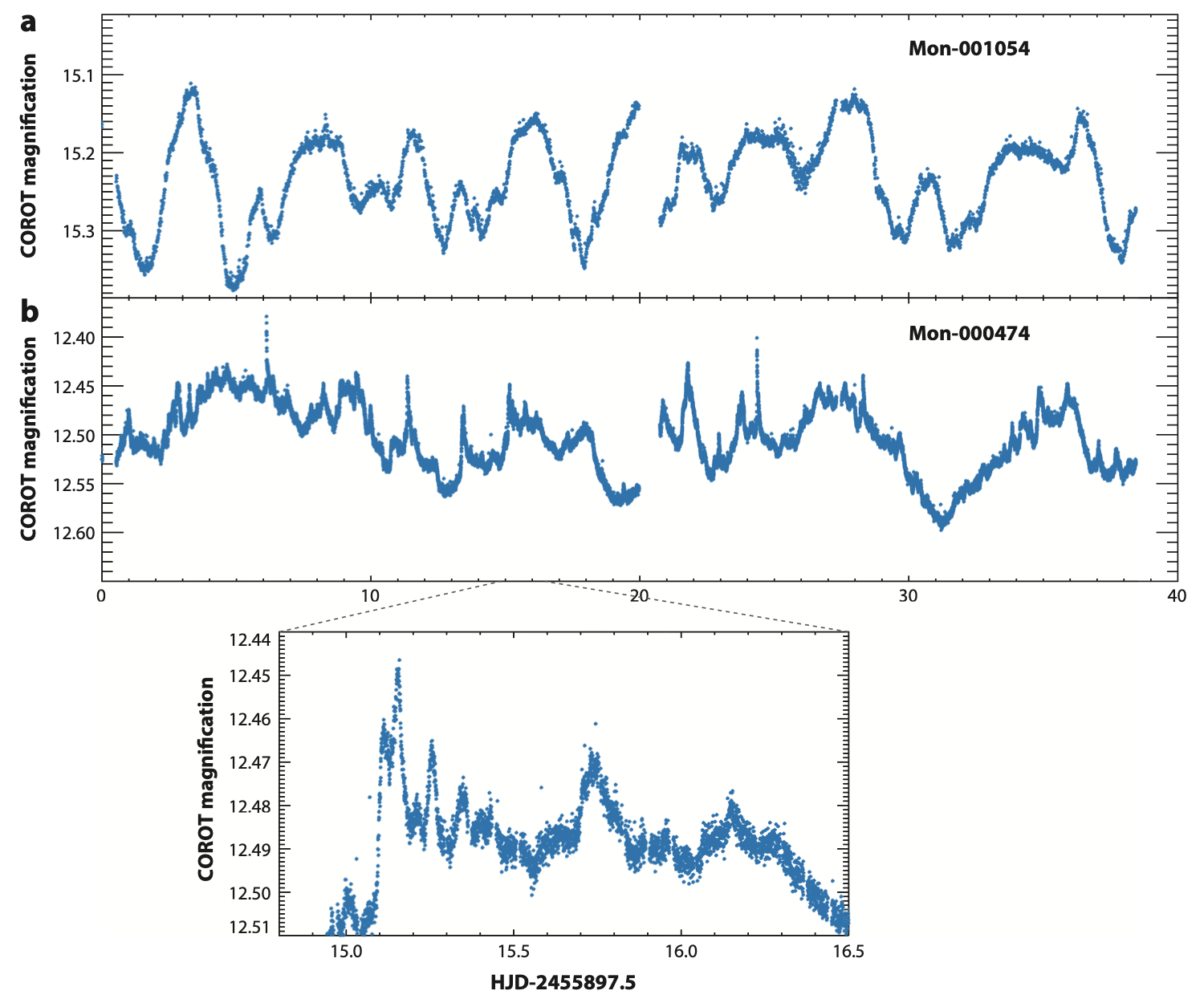
Figure 4: A light-curve
taken of
an accreting star. Magnitude (brightness) is shown on the y-axis and
time on the x-axis. The periodicity (or
stochasticity) can give us a peak into the structure of the inner
accretion disk. Hartmann
et al. (2016)
Photometric variability is a defining characteristic of T-Tauri stars (see
Figure 4). The source of variability is highly dependent on
the timescale the change is observed to occur on.
Transitional Disks
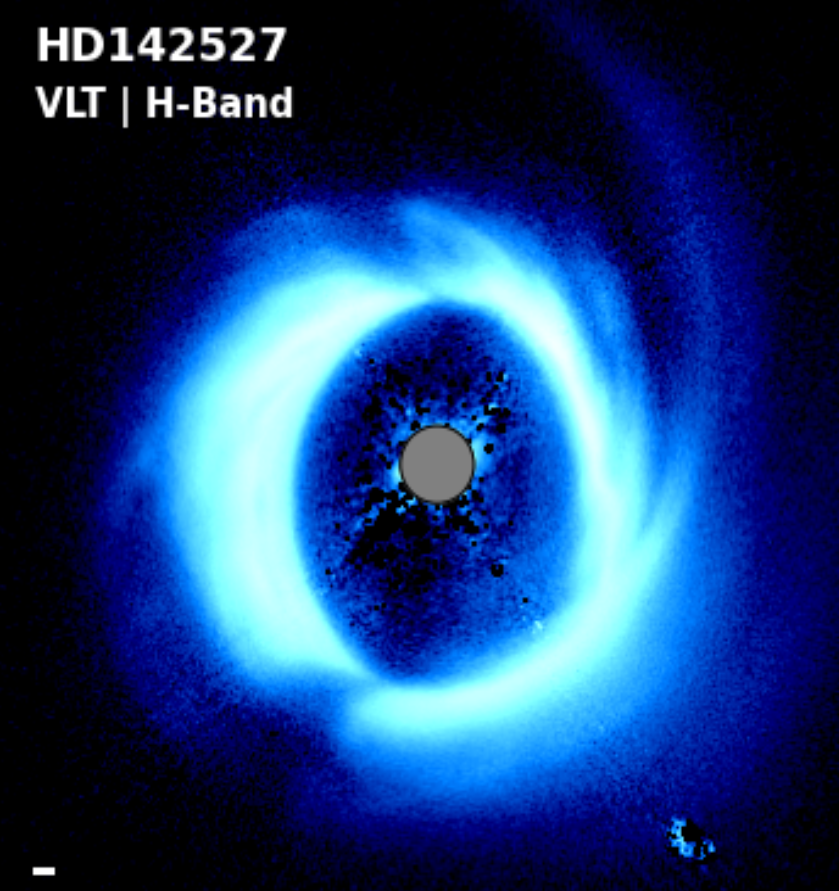
Figure 5: The HD 142527
system with it's central cavity imaged.
The gaps in transitional disk systems can be astonishingly wide. For
perspective, the white bar in the corner of the figure represents 50
AU.
A combination of planet formation, accretion on to the star, and
photoevaporative winds produce these clearings. Benisty et al. (2022)
My project was concerned with a subset of T-Tauri stars with large cavities
carved out in their centers—transitional disks (see Figure
5). These cavities are
thought to be formed by embedded accreting protoplanets. Owing to their
distinct cavities, transitional disks were suspected to have different
accretion patterns as opposed to their full-disk counterparts, but no
significant differences have been identified yet. Transitional disks are
also very
good candiates for direct imaging of accreting protoplanets since they are
not enshrouded by the protostellar natal envelope. My project attenpted to
characterize the Hα emission produced by accreting transitional disks
and produce photometric ratio light-curves to investigate variability and
possible sources. The Hα/Cont ratios in my study were also used for direct
imaging of the protoplanet (see Follette et al. (2022)).
Second-to-Minute Variability
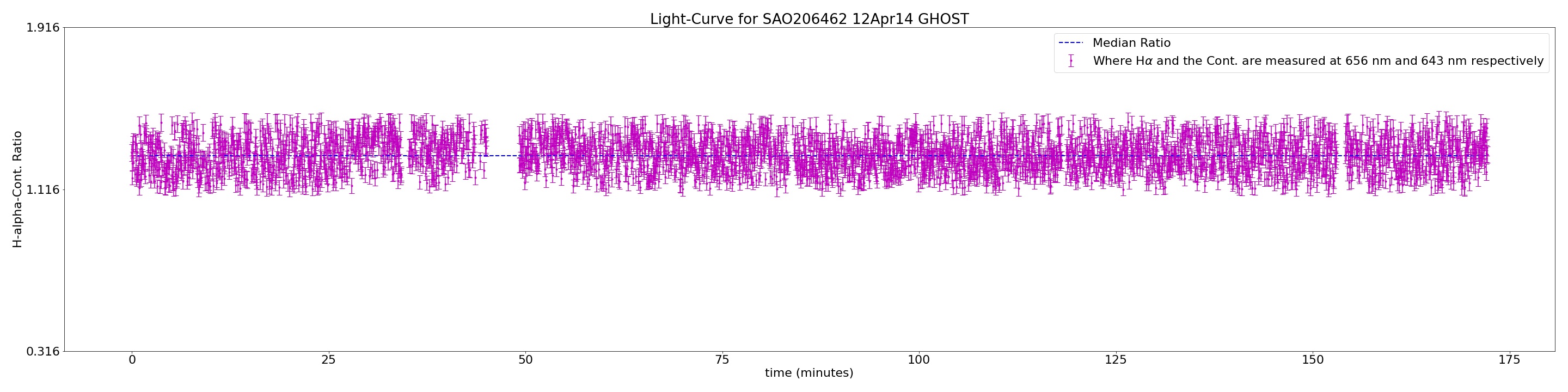
Figure 8: A light-curve
for the SAO 206462 object on April 12, 2014. We can see that there
is little variation in the
Hα/Cont ratio with time.
I find that none of the datasets show signifcant variability on the
second-to-minute timescale (see Figure 8). The only source
of variability we should expect on the second-to-minute timescale is due to
a model-dependent oscillating shock-front
in the accretion column. I assert that by taking the Hα/Cont ratio, we
bypass continuum shock emission, which is why we see no variability.
Alternatively, the ampltitude
of the oscillations could just be too small to detect, and are lost in the
errorbars. Change in mass-infall rate is the only souce of variability in
the Hα/Cont ratios to which
we are sensitive. However, changes in accretion rate are limited to the
free-fall timescale (a couple of hours for most stars). The longest
time-series in GAPlanetS is about 2.5 hours—too short to
observe changes in mass-infall.
Day-to-Day Variability
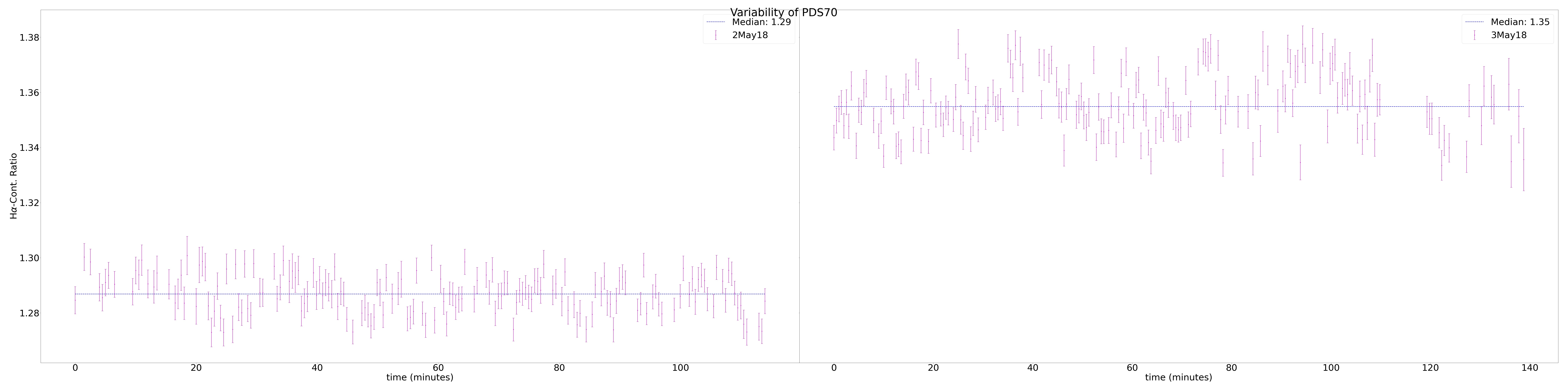
Figure 9: Two light-curves
for the PDS 70 system on May 2nd, 2018 (left) and May 3rd, 2018
(right). There is a signficant increase in the Hα/Cont ratio
from one day to the next.
Several datasets for which data was acquired for consecutive days for the
same object show signficant variaiblity in their Hα/Cont ratios (see
Figure 9). Day-to-day changes such as these are consistent
with changes in mass
accretion rate since enough time has passed for the magnetosphere to sweep
through different parts of a clumpy, inhomogenous disk.
Year-to-Year Variability
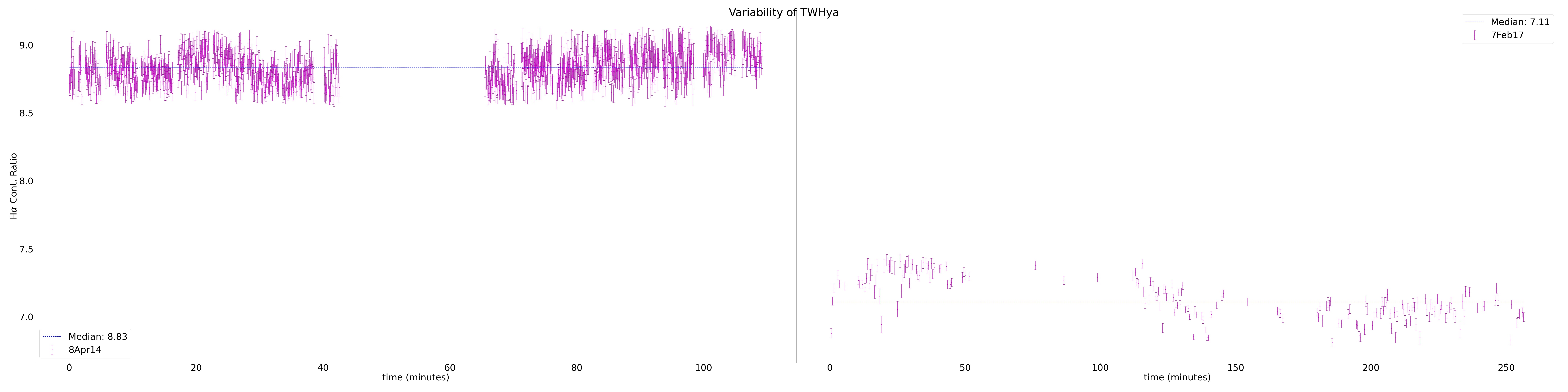
Figure 10: Two
light-curves for the TW Hya system in 2014 (left) and 2018 (right).
There is a signficant decrease in the Hα/Cont ratio
which is consistent with large scale changes in mass-density of the
inner-disk.
A few datasets show significant variability on the year-to-year timescale
(see Figure 10). The object with the largest changes in
GAPlanetS is TW Hya, which shows a 21% decrease in Hα over the course of 3
years.
Such changes on the year-to-year timescale are consistent with large scale
mass-density gradients in the inner-disk.
Weak-Lined T-Tauri Stars
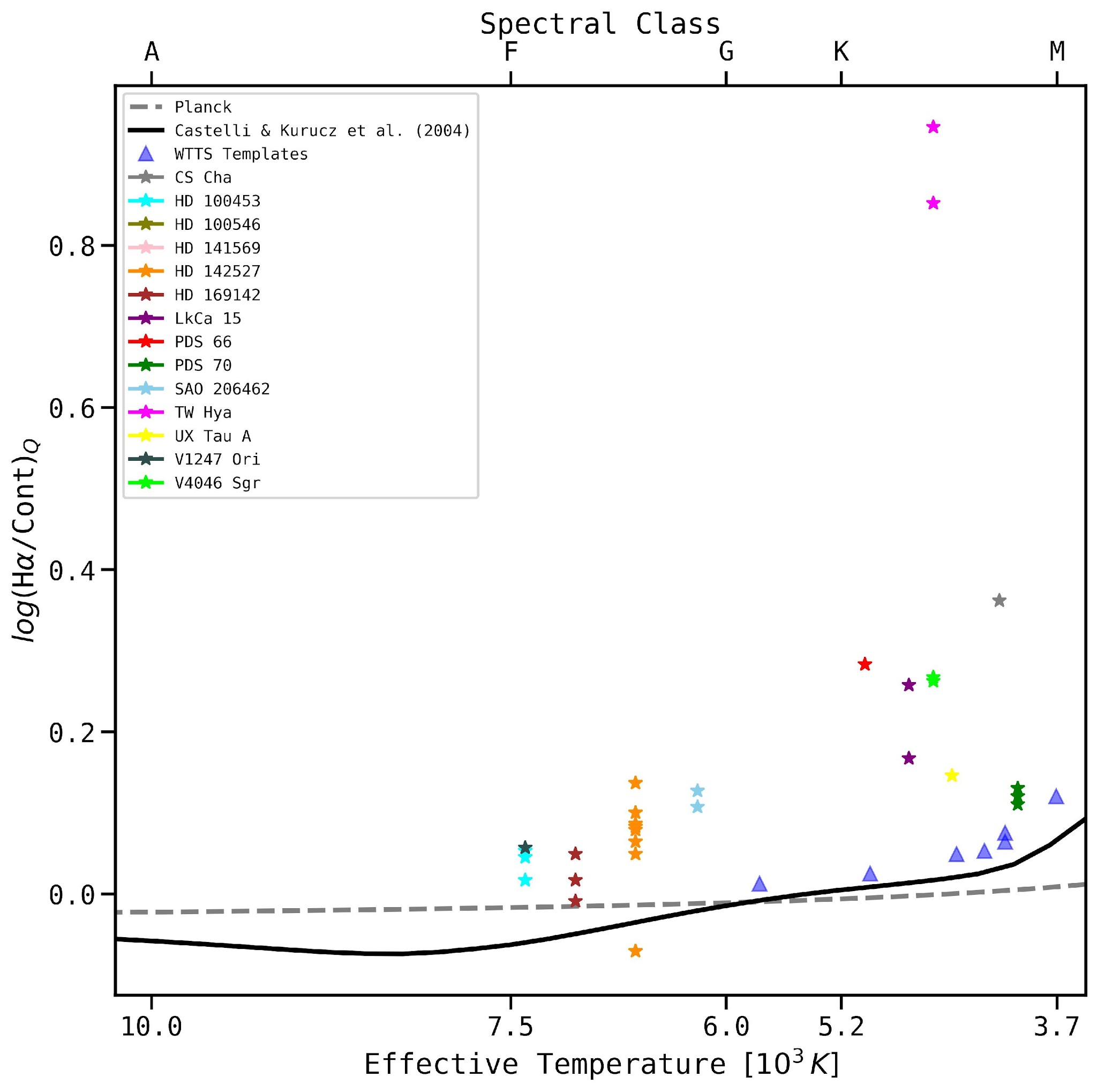
The black curve and gray dashed line
represent the Hα/Cont ratio calculated from the Castelli & Kurucz
models and Planck Function respectively. The blue triangles
represent the ratios calculated from the WTTS templates, and the
various colored stars represent the median ratios measured from the
GAPlanetS data. Morales et al. (2023, in progress)
Some of the datasets in GAPlanetS showed peculiar Hα/Cont ratios whose values
were less than unity. Due to simplifying assumptions, this was not expected to
be possible.
I took synthetic stellar spectra from the Catelli & Kurucz (2004) Atlas models and convolved them
with the
filter response functions of VisAO (the camera used to acquire GAPlanetS data)
to simulate what a non-accreting star would look like in our data. I repeated
this process with actual spectra of weak-lined T-Tauri stars (WTTSs)
of various spectral classes. The results of this study can be summarized in the
figure above.
Note that the shape of the black curve and the blue triangles are nearly
identical, with a slight vertical offset. This offset is due to a lack of
chromospheric
activity and weak accretion in the Catelli & Kurucz models. Both processes
contribute a small amount of Hα emission that would cause the blue triangles to
have slightly higher values.
No object can reach below the blue/black curves (within uncertainty) on this
plot. Objects closer to the curves are likely in a phase of relative quiescence
and those at the top are strong accretors.
Therefore, objects with a ratio less than unity are in-fact physical, and are
likely due to the prescence of weak-accretion and a deeper Hα absorption line.
For a more comprehensive overview of this project, stay tuned for
Morales et al. (2023, in progress)!
Teaching
Teaching younger students and doing my part to raise the next generation
of scientists has been one of the most rewarding experiences of my life.
I've had the honor of working as an instructor, tutor, and
teacher assistant for the following classes:
Private tutoring
Fall 2024 - Present · Independent
Algebra I–II
Precalculus
Trigonometry
Calculus I–II
Introductory Statistics
Physics I
Introductory Astronomy
Observational Astronomy
Modern Astrophysics
Numerical Methods
New Mexico State University
Fall 2022-Present
Introduction to Astronomy (Lab Instructor/TA)
University of Massachusetts Amherst
Fall 2020 - Spring 2021
ASTRON 101: The Solar System (Tutor)
ASTRON 100: Exploring the Universe (Tutor)
Trio Upward Bound by UMass Boston
Summer 2019 & Summer 2020
Robotics (Instructor)
Physics (TA)
Advanced Algebra (TA)
Precalculus (TA)
SAT Math (TA)
Chemistry (TA)
Leominster High School
2017-2018
AP Physics (TA)
Honors Physics (TA)
Cosmology (TA)
Planetary Astronomy (TA)
Materials
A future home for free teaching and mentoring resources.
Materials I create for teachers and mentors to use with their own students and mentees will be collected here as they become available.
Teaching resources
Worksheets, handouts, and activities.
Resources coming soon
Mentoring resources
Guides and templates for mentorship.
Resources coming soon
Classroom & research tools
Practical tools for learning and research.
Resources coming soon
AstroStack
I develop AstroStack, a research workflow platform for scientific project organization and automation. My computational work also includes applying language models to workflow automation, code generation and debugging, scientific visualization, documentation, and version-controlled development.
These 25 panels are placeholders for future AstroStack feature screenshots.
Screenshot 01
Future AstroStack feature screenshot, slot 01.
Screenshot 02
Future AstroStack feature screenshot, slot 02.
Screenshot 03
Future AstroStack feature screenshot, slot 03.
Screenshot 04
Future AstroStack feature screenshot, slot 04.
Screenshot 05
Future AstroStack feature screenshot, slot 05.
Screenshot 06
Future AstroStack feature screenshot, slot 06.
Screenshot 07
Future AstroStack feature screenshot, slot 07.
Screenshot 08
Future AstroStack feature screenshot, slot 08.
Screenshot 09
Future AstroStack feature screenshot, slot 09.
Screenshot 10
Future AstroStack feature screenshot, slot 10.
Screenshot 11
Future AstroStack feature screenshot, slot 11.
Screenshot 12
Future AstroStack feature screenshot, slot 12.
Screenshot 13
Future AstroStack feature screenshot, slot 13.
Screenshot 14
Future AstroStack feature screenshot, slot 14.
Screenshot 15
Future AstroStack feature screenshot, slot 15.
Screenshot 16
Future AstroStack feature screenshot, slot 16.
Screenshot 17
Future AstroStack feature screenshot, slot 17.
Screenshot 18
Future AstroStack feature screenshot, slot 18.
Screenshot 19
Future AstroStack feature screenshot, slot 19.
Screenshot 20
Future AstroStack feature screenshot, slot 20.
Screenshot 21
Future AstroStack feature screenshot, slot 21.
Screenshot 22
Future AstroStack feature screenshot, slot 22.
Screenshot 23
Future AstroStack feature screenshot, slot 23.
Screenshot 24
Future AstroStack feature screenshot, slot 24.
Screenshot 25
Future AstroStack feature screenshot, slot 25.
Elements
Text
This is bold and this is strong.
This is italic and this is emphasized.
This is superscript text and this is
subscript text.
This is underlined and this is code: for
(;;) { ... }. Finally, this is a
link.
Heading Level 2
Heading Level 3
Heading Level 4
Heading Level 5
Heading Level 6
Blockquote
Fringilla nisl. Donec accumsan interdum nisi,
quis tincidunt felis sagittis eget tempus euismod.
Vestibulum ante ipsum primis in faucibus vestibulum.
Blandit adipiscing eu felis iaculis volutpat ac
adipiscing accumsan faucibus. Vestibulum ante ipsum
primis in faucibus lorem ipsum dolor sit amet nullam
adipiscing eu felis.
Preformatted
i = 0;

																	while (!deck.isInOrder()) {
																	print 'Iteration ' + i;
																	deck.shuffle();
																	i++;
																	}

																	print 'It took ' + i + ' iterations to sort the
																	deck.';